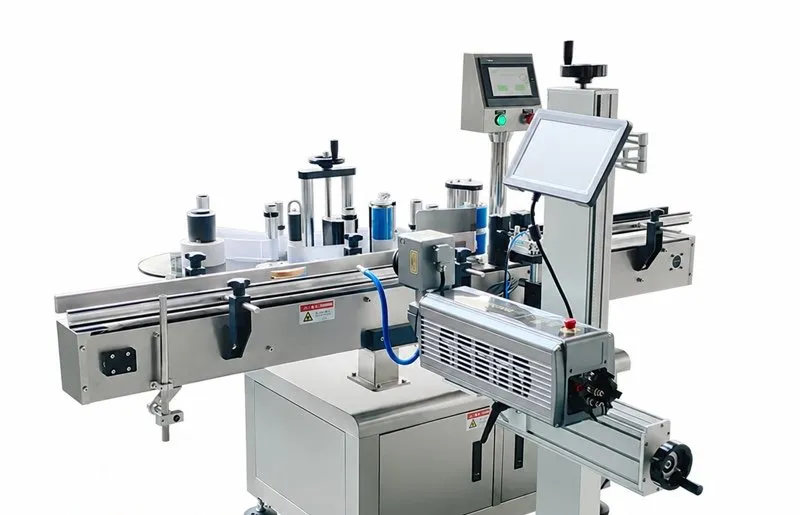
Honey jar packaging line
Labeling stage (round jars)
A line page listing filling, capping and labeling for honey jars. The machine shown is the labeling station.

[Applications]
Honey state, filling temperature, container and cap decide the line. Give those first.
[01]
These facts decide a honey line. Send what you have; "undecided" is a fine answer.
| Give us | Why it matters |
|---|---|
| Honey state when it reaches the filler: liquid, creamed, crystallized, or mixed | Crystallized or creamed honey doesn't behave like a clear liquid. It may need warming, and feeding is harder. |
| Temperature at filling and how you hold it | Warm honey flows; cool honey strings and traps air. |
| Container: glass jar, plastic jar or squeeze bottle, with opening size and height | Opening and shape decide the nozzle, the capping head and the labeling method. |
| Closure: screw cap, lug cap, flip-top or push-pull | Lug caps depend on neck finish and vacuum; flip-tops need orientation. |
| Fill volume per container and how many sizes | Several sizes call for planned format change on filler, capper and labeler. |
| Label type and where it goes | Hexagonal jars and tapered jars change how labels wrap. |
[02]
Honey is thick and sticky, and its behavior changes with temperature, like other paste products. Crystallized and liquid honey need different feeding. A hopper with gentle heating is a common way to keep honey flowing. Heating, stirring or a holding tank are not included by default; engineering decides for each honey.
The filler is usually a positive-displacement type, such as a servo volumetric piston or a peristaltic pump. Our honey pages list both, on a machine that fills closure cavities rather than jars. A jar line uses the same kinds of dosing, applied to your container.
Honey causes three problems. Drip after the nozzle closes dirties the jar rim. Stringing leaves a thread across the opening or on the cap. Air in the stream makes bubbles in clear glass. Nozzle design, shut-off and fill speed are tuned against all three, with results that depend on your honey and jar.
[03]
Glass jars usually take screw or lug caps. Lug caps depend on the neck finish and the vacuum seal the jar forms. Plastic squeeze bottles take flip-top or disc-top closures that need orienting. Tell us the exact closure on WhatsApp so the capping head and cap feeder fit it.
Our honey jar labeler is a wrap-around machine for honey jars and glass containers, including hexagonal jars, and our honey packaging line page names filling, capping and labeling as stages. Honey on the rim or jar wall smears labels and caps, so jars should leave the filler clean.
Inspection is optional: a missing-cap or missing-label check, or a fill-level check, if your market asks for it.
[04]
Our product pages that relate to honey.
Labeling stage (round jars)
A line page listing filling, capping and labeling for honey jars. The machine shown is the labeling station.
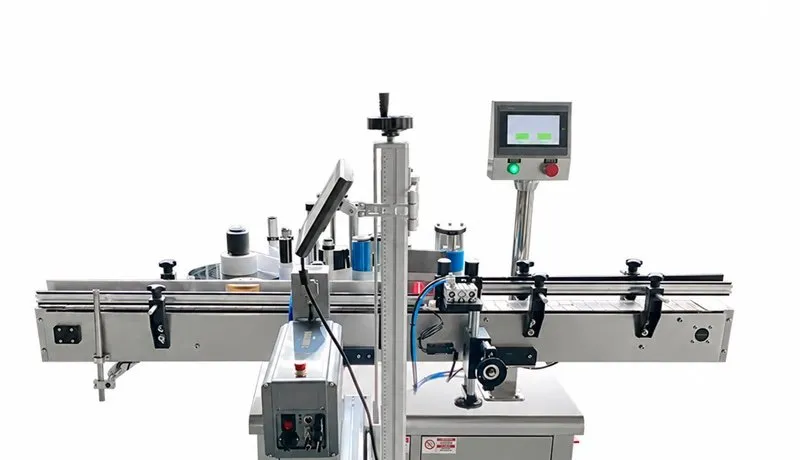
Labeling machine (wrap-around)
A wrap-around labeler listed for honey and glass jars, including hexagonal jars.
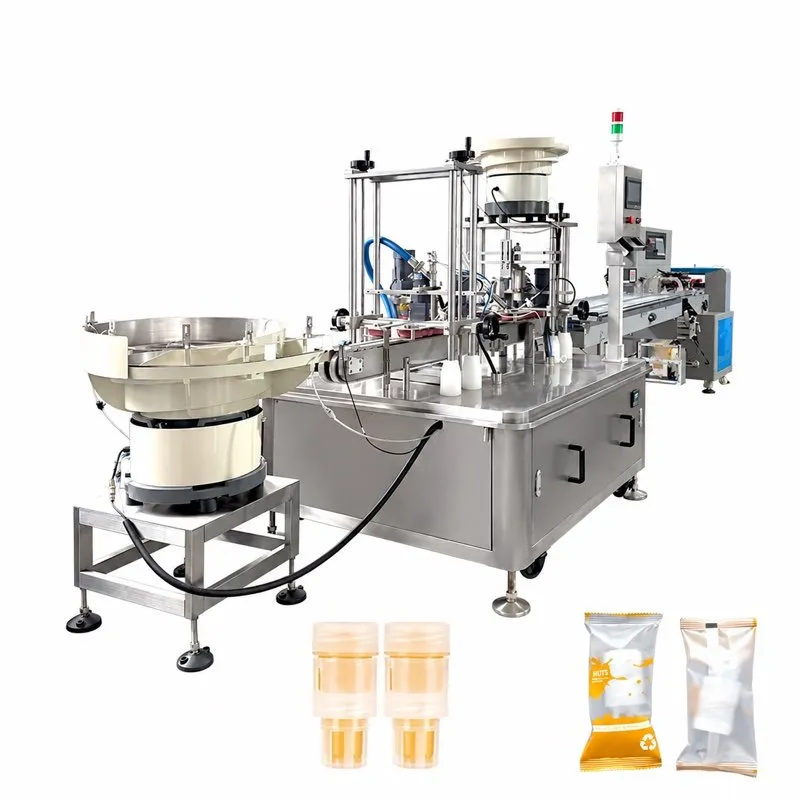
Fill-seal line (closure cavities)
Doses honey into closure cavities and seals with foil. It's a different pack from jars and bottles.
[05]
Honey leaves a thick film on every surface, and warm water flushes it better than cold. Plan where the water goes, how long the line sits idle for cleaning, and whether the filler comes apart without tools.
Switching honeys can matter: varietal, color, allergens, or additions such as flavors or comb. Tell us how often you switch, and list every jar size so nozzle, capping head and label guides are planned together.
[06]
We publish no speeds or areas here. Output depends on honey state, container and the slowest station.
[07]
We configure and build each honey line to order, around your honey, jar and cap. The table is the usual starting split, and the proposal fixes the final one. On site, commissioning runs the line empty first, then with honey.
Honey filling into jars or bottles
Filler configured for your honey at filling temperature.
Capping (screw or lug caps) and labeling
As configured for your jar or bottle.
Jar or bottle feeding and unscrambling
Coding and inspection
Honey heating, decrystallizing and holding tank
Engineering decides for each honey; not included by default.
Blending, straining and moisture adjustment of honey
Power, compressed air and room preparation
[Request]
Send the honey state, the jar or bottle and closure details, and the output you want per shift.