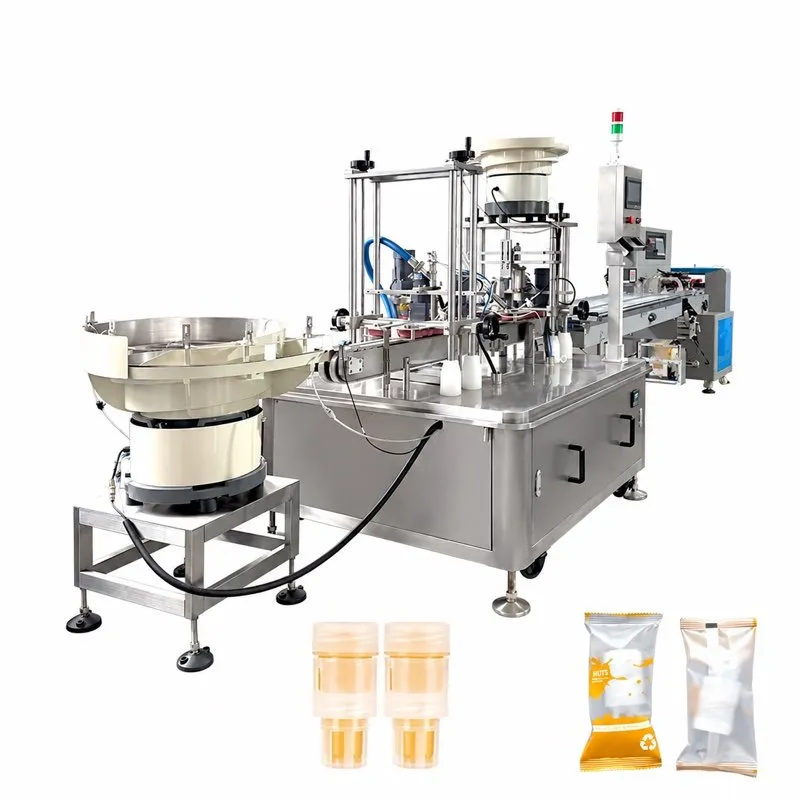
Cap-cavity honey filling and sealing line
Fill-seal line (closure cavities)
Doses honey into closure cavities with a servo volumetric piston or a peristaltic pump, then seals with foil.

[Filling lines]
How a paste fills depends on its temperature, its particles and how it is fed. Tell us how it behaves at filling temperature and we configure the line around that.
[01]
A paste behaves differently warm, cold, stirred or still. We size the line from how the paste behaves at the filler. The label doesn't tell you that.
| Question | Why it matters |
|---|---|
| How thick is it at filling temperature, and does it change with temperature? | Thicker product needs positive dosing and may need a warm hopper. |
| Is it smooth, or does it contain seeds, pieces or fibers? | Particles decide nozzle and valve size and can limit which filler is suitable. |
| Does it hold air or trap bubbles? | Air shows up as short fills and bubbles in clear jars. |
| Does it string or drip after the nozzle closes? | Stringing dirties rims and caps, and affects the seal on foil-sealed containers. |
| Does it set, crystallize or skin over when it sits? | It limits how long product can sit in the hopper, and what you can leave in the line overnight. |
[02]
General engineering notes. Our honey pages list servo piston and peristaltic dosing, and our sauce cup page lists servo piston dosing.
| Approach | Commonly considered for | Watch points |
|---|---|---|
| Servo volumetric piston from a hopper | Thick, smooth to lightly textured products where each container needs a set volume. | Seals and valves must be cleaned; large particles can jam the valve. |
| Peristaltic pump | Sticky or delicate products where a simple product path simplifies cleaning. | Tubing is a wear part; output depends on tube size and viscosity. |
| Other positive-displacement pumps (such as rotary or gear types) | Products that need steady transfer to the filler. | Depends on how the product behaves. |
| Heated or stirred hopper | Products that thicken or set when cooled. | Heating is not assumed; engineering decides for each product. |
[03]
Wide-mouth jars suit thick products, because the big opening lets a thick stream in without trapping air. Narrow-neck bottles suit sauces and creams that still pour. Squeeze bottles add a nozzle and a cap that must be oriented before placing.
After the filler, the line tightens the cap, applies a label and may print a code. Our catalog has wrap-around labelers for round jars and bottles, glass or plastic, and notes that oil residue on glass can affect label adhesion.
Foil sealing is a separate station with its own container prep, used for cups and some jar rims. It appears in our cup and cap-cavity machines.
[04]
These are the closest examples we have: viscous dosing into closures and cups, and a sauce bottle line. Filling thick product into your own bottles or jars is something we work out with you.
Fill-seal line (closure cavities)
Doses honey into closure cavities with a servo volumetric piston or a peristaltic pump, then seals with foil.
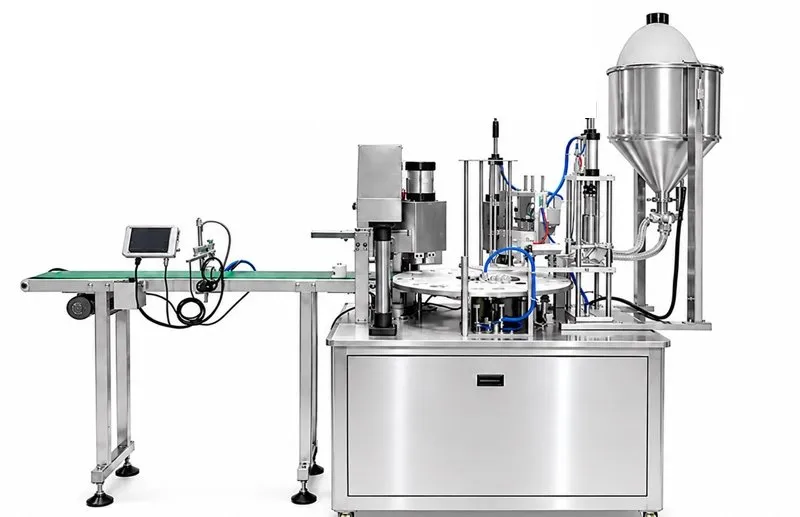
Fill-seal machine (cups)
A rotary cup filler with a conical hopper and servo piston dosing, described as clean-in-place ready.
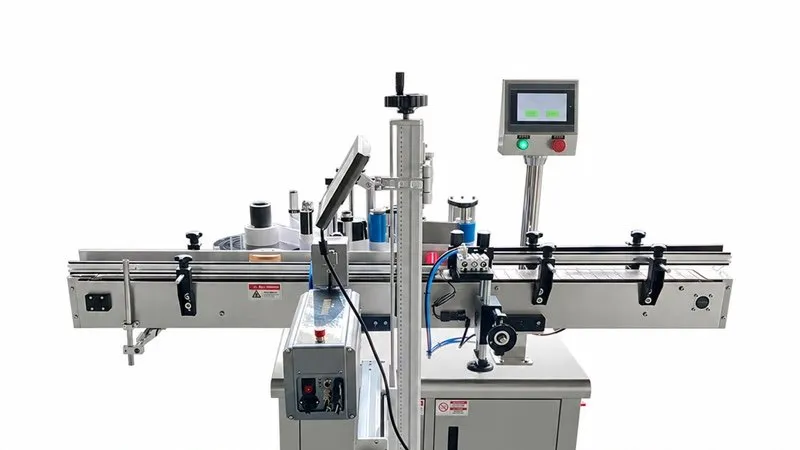
Labeling stage (wrap-around)
A line page listing volumetric filling with labeling for sauce bottles.
[05]
We publish no speeds or accuracy figures for paste lines. Output depends on how fast the product can be dosed without air or stringing, on container size and on the slowest station in the line.
The proposal states output for the agreed product, container and stations. Commissioning on site runs the line empty first, then with product. Tell us what you need per shift and how many people will run the line.
[06]
A paste leaves residue in the hopper, valve, pump, nozzle and drip tray. The more often you change product, the more easy cleaning matters. Quick-release fittings, short product paths and a hopper you can reach with a brush all help.
Our sauce cup filler is listed with a clean-in-place design. Whether that suits a bottle or jar line depends on the product. If your recipes include allergens or strong colors, tell us at the start, and plan for rinse water and product loss too.
[07]
Honey and sauces are described on their own pages with their own conditions.
[08]
Every paste line is configured to your product and container and built to order. The table shows the usual split. Hopper, feed heating and particle size stay open until we know how your product behaves.
Product feed and dosing to the container
Filler type selected for the product and container.
Capping and labeling stations
As configured.
Hopper size, agitator or heated feed
Depends on the product at filling temperature.
Products with large particles or pieces
Coding and inspection
Cooking, blending and product preparation
Utilities, floor and room preparation
[Request]
Send the product name, how it behaves at filling temperature, any seeds or pieces, and the container and closure.