
[Buying guides]
Jar Filling Line: Neck Finish, Lump Size and the Closure the Filler Must Match
Bring the jar drawing, product-piece details and cap specification into the same line brief. Work through the opening, cut-off and closing checks before requesting a configuration.
Updated October 2026
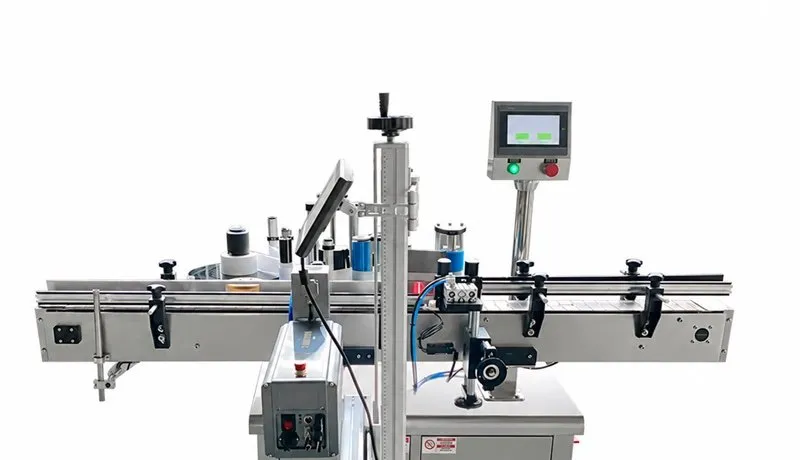
Choose the package before the filling head
Start your jar filling line brief with the jar drawing, the product-piece description and the exact closure. Use the checks below to discuss a wide mouth jar filling line with us, from the opening to the closed pack.
Particles determine nozzle and valve size and can limit filler suitability.
Closures must be matched with appropriate containers and are not interchangeable.
For the wider equipment discussion, see our paste filling lines. Here, work through the neck, lump size and closure checklist before requesting a configuration.
Read the neck drawing, not just the jar diameter
| Drawing detail | Meaning | Put in the brief |
|---|---|---|
| I | The I dimension is the inner diameter of the bottle neck. | Request the minimum opening on the drawing. |
| T | The T dimension is the outside diameter of the thread. | Request the thread diameter and tolerance. |
| E | The E dimension is the outside diameter of the neck. | Include the neck outside profile. |
| H | The H dimension is the height of the neck finish. | Include the finish-height detail. |
| S | The S dimension is measured from the top of the finish to the top edge of the first thread. | Include the position of the first thread. |
Keep filling access and cap engagement separate
A minimum I dimension allows sufficient clearance for filling tubes.
The tolerance range of T determines the mate between bottle and closure.
The S dimension determines closure orientation and the amount of thread engagement.
Mark the filling tube outline and the jar opening on the same drawing. Ask for the proposed tube outside diameter and its position relative to the neck. Keep the thread and closure drawing alongside it.
Inspect the opening and the finish

Read the complete continuous-thread designation
For a continuous-thread neck-finish designation, the first number represents the outer diameter of the neck opening in mm.
For that designation, the second number refers to thread configuration and neck height.
Choose closure styles with the same neck-finish numbers.
Copy the full designation into the package brief. Attach the cap and jar drawings rather than entering only a nominal mouth size.
Describe the product pieces before choosing the valve
For a servo volumetric piston filler fed from a hopper, large particles can jam the valve.
Record the largest observed piece length, width and thickness. Describe its shape, softness, fibers and the amount of solids in the product. Add the intended filling temperature and photos of the product as it will reach the filler.
Unifiller Multi Depositor listed particle size: Up to 1/2″ cube (13 mm).
Keep a particle rating attached to the named machine in your comparison sheet. For your proposed configuration, ask for the product-path drawing and the specified particle limit.
Look at the pieces in the product

Specify the cut-off action at the rim
On Unifiller Europe Cutoff Nozzles, the cut-off mechanism allows lumpy products to be cleanly separated.
Unifiller Europe Cutoff Nozzles list depositing meat and vegetable fillings containing chunks as an application.
Stringing dirties rims and caps and affects the seal on foil-sealed containers.
Ask how the proposed nozzle ends the deposit. Include rim condition in the filling-and-closing discussion. For product-specific planning, continue to sauce filling lines or honey filling lines.
Match the closing operation to the cap
| Closure | Application or construction | Package brief |
|---|---|---|
| Lug or twist cap | Twisting a lug cap onto the finish seats its lugs with the glass threads. | Identify the matching glass finish and cap drawing. |
| Plastisol-lined continuous-thread cap | The plastisol-lined continuous-thread cap is applied by screwing the closure onto the glass finish. | Include the closure, liner and thread specification. |
| Press-on twist-off cap | The press-on twist-off cap has a steel shell with no lugs. | Identify the intended closing process and vacuum requirement. |
Include headspace and the vacuum-closing process
Headspace is the area between the product and the cap or closure.
For lug or twist caps, vacuum maintains the seal.
The press-on twist-off cap is held primarily by vacuum formed by condensing steam in the headspace.
As the hot-filled product cools and shrinks, condensing steam and water vapor in the headspace form a vacuum.
Record the chosen closure system, filling condition and headspace requirement together in the brief.
Review the product condition at sealing
For steel vacuum closures, higher product sealing temperature gives higher resulting package vacuum.
For steel vacuum closures, more air in the product gives lower resulting package vacuum.
Enter the intended sealing conditions and package-vacuum acceptance requirement for your product. Keep these fields with the closure specification.
Use the closure fault to focus the check
| Observed issue | Relevant mechanism | Review point |
|---|---|---|
| Cocked cap | Cocked caps are cross-threading misapplications that typically occur through container and closure misalignment. | Review jar presentation and cap alignment together. |
| Application mismatch | Spindle speed and closure descent rate need to match the closure/bottle thread angle for proper application. | Review the descent and rotation settings for the selected closure. |
| Over-applied lug closure | Over-applying a lug closure can bend its lugs off the glass threads. | Inspect the lug and glass-thread engagement. |
| Stripped thread | Strip torque can override matching threads, resulting in loose caps, no seal or package deformation. | Review the package condition and application setup. |
Plan jar presentation through closing and labeling
Application torque affects seal integrity and tightness between bottle and closure.
Glass surface treatment can affect closure and label application.
For a glass jar filling line, include body diameter, overall height, base profile and filled mass in the format list. Ask where the jar will be supported at filling and closing, how it will be restrained, and which guide or change parts are proposed. Include the handoff to labeling in the layout.
Carry the format discussion through to labeling
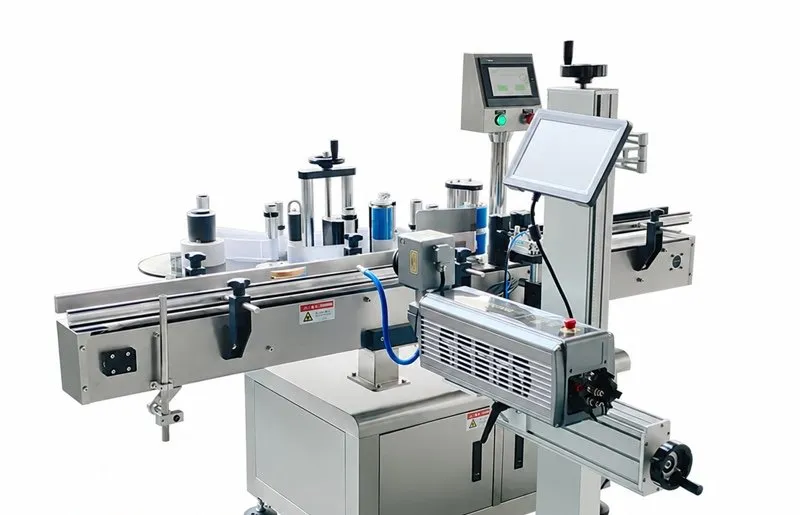
Define the proposed configuration with us
For our industrial honey packaging line, we develop the equipment configuration, tooling and integration around your product, pack format and production requirements.
For that line, our application-specific specification covers output, pack-size range, machine dimensions and utilities.
Bring your jar, product and closure details into the same discussion. Use the checklist below as the starting brief.
Jar opening, particle-size and closure checklist
| Item | Record or attach | Question to resolve |
|---|---|---|
| Jar and neck | Jar drawing, finish designation, opening, body profile and base detail | Which drawing revision defines the proposed format? |
| Product pieces | Largest observed length, width and thickness; shape, softness, fibers and solids description | Which particle limit and product path are proposed for this product? |
| Filling head | Nozzle outline, location at filling and proposed cut-off action | How will the proposed head fit the opening and end the deposit? |
| Screw or lug-vacuum closure | Cap drawing, liner, finish match and closing process | Which cap and jar pair is the configuration for? |
| Closing conditions | Application requirements, headspace and package-vacuum requirement where applicable | What conditions and acceptance checks will be recorded? |
| Jar handling | Overall height, body diameter, base profile, filled mass and layout | Which supports, guides, restraint and change parts are included? |
| Production brief | Output target, pack-format list and site utilities | Which formats and interfaces belong in the proposal? |
Sources
- FillingLine: Paste Filling Lines
- University of Nebraska–Lincoln: Food Containers: Glass Jars
- Berlin Packaging: Neck Finish Guide
- Pretium Packaging: Neck Know-how
- Unifiller: Multi Depositor
- Unifiller Europe: Cutoff Nozzles
- Silgan University: Steel Closures
- Silgan: Glossary of Common Terms
- LINEVO PACK: Industrial Honey Packaging Line
[Request]
Send your jar and closure brief
Send the completed checklist and drawings through WhatsApp. Ask us to review the jar opening, product pieces and screw or lug-vacuum closure together.
Our team reviews your product, container and line requirements with you.
[Keep planning]
- Paste Filling LinesAir and stringing in a paste end up as short fills and dirty seals. Tell us how your product behaves at filling temperature and we configure the feed, dosing and sealing around it.
- HoneyHoney that strings or traps air leaves dirty rims and bubbles in clear jars. Give us the honey state, filling temperature, jar and cap first; they decide the line.
- SaucesParticles that do not suit the bottle opening can block filling or leave sauce on the sealing rim. Match the sauce at filling temperature, its pieces and the container opening before choosing stations.
- Piston vs Gear PumpA piston filler meters through a cylinder stroke; a gear pump filler meters through rotating gears. Compare their product path, valve, seals, dose adjustment and refill behavior with the actual formulation, then connect the selected meter to bottle handling and cleaning.