
[Buying guides]
Semi-Automatic Bottle Filling Line: Which Stations Stay Manual
If you already fill bottles with a semi-automatic bottle filling machine, the next question is which station to automate. This guide takes each station in turn, says when it can stay manual and what tells you to automate it, and suggests an order that lowers the risk of reworking the handovers between stations later.
Last updated 7 October 2026
Which Stations Can Stay Manual on a Small Bottle Line?
For a small bottle line that already has a semi-automatic filler, our suggested path is capping next, then a conveyor between stations, then labeling and sleeving, with case packing last. It is a reference path, not a fixed rule. Leave a station manual while the people there keep up with the filler without causing defects, and automate the one that holds the filler back or whose faults reach the finished bottle. If that station sits later in the line, start there and plan the handover into it.
This guide covers which stations to add and in what order. It does not compare manual, semi-automatic and automatic fillers on their own; for prices and what a quotation covers, see the filling line cost guide.
The station rules below compile public pages from equipment suppliers for each station type, checked against the integration principles we use when we review a line layout.
What to Record Before You Decide
Write down how the line runs today before choosing the next machine. These are the facts a supplier needs to say whether a station can be added without moving the others.
- The product and how it behaves: thin or thick, foaming, with particles, and its temperature at filling. It decides the filling method, as the guide on how to choose a filling line explains.
- Each bottle and closure you run: material, shape, neck finish, cap type (screw, press-on, pump or trigger) and any liner or inner seal.
- Labels and sleeves: how many labels each bottle carries and on which sides, and whether you use a full-body sleeve or a neck band.
- How many good bottles you need per day or per shift, and how many shifts you run. "Not decided yet" is an acceptable answer.
- Who does what at each station today, and where bottles wait between stations.
- How often you change bottle, cap or label, and how long a changeover takes now.
- The floor space between stations, and how finished bottles are packed into cases.
Station by Station: Keep It Manual or Automate It?
Look at three things at each station: whether the people there keep pace with the filler, whether hand work is causing defects, and whether the handover from the station before it is ready. The rows below are our judgment from public supplier information.
| Station | Keep it manual while | Automate it when | What it depends on |
|---|---|---|---|
| Filling | An operator placing each bottle under a semi-automatic filler keeps pace with the stations after it. This is the station most small lines make semi-automatic first. | The operator at the filler is the reason the next station waits, or you need more filling heads. Suppliers describe adding heads before moving to an automatic filler. | Product behavior sets the filling method. Every later station has to keep up with the filler's rate, or the filler keeps starting and stopping. |
| Capping | Operators place and tighten caps by hand, or with a handheld or bench capper, at the filler's pace and without loose or cross-threaded caps. | Loose, cross-threaded or over-tight caps keep appearing after you have checked that cap and bottle finish match, or one person spends the shift pressing caps on by hand. Some suppliers offer cappers that accept a cap feeder later; whether yours can depends on the model. | Bottles arriving upright and centered, with a clean sealing surface. A loose cap can leak on the conveyor and spoil the label later. |
| Moving bottles between stations | Each station is a separate bench and operators carry trays of bottles from one to the next. | Two stations need to run at the same rate, or bottles tip and get mixed up while being carried. A conveyor is what turns separate machines into a line. | Bottle dimensions and changeover details. Transfer heights and guide rails must match at each handover, or bottles tip and jam. |
| Labeling | A semi-automatic labeler, loaded one bottle at a time, keeps up and the labels sit straight. | Labels go on crooked or the operator at the labeler cannot keep pace. Automatic labelers can orient the bottle themselves and can run standalone or as part of a conveyor line. | Bottles arriving upright, centered, evenly spaced, dry on the outside and facing the right way for front and back labels. A new bottle or label can need new guide parts. |
| Sleeving | Sleeved products are a small share of output and sleeving never makes the filler or capper wait. | Bottles queue at sleeving and the filler or capper has to wait. A sleeving station is two units: an applicator that places the sleeve and a hot-air or steam tunnel that shrinks it. | A moving conveyor through the tunnel, with temperature and conveyor speed set for the sleeve film. Neck bands go over the cap, so they come after capping. |
| Case packing | People at the end of the line erect cases, load the bottles and seal the cases as fast as bottles arrive. Regular slotted cases fold up by hand from flat. | The packers at the end cannot keep up and bottles back up toward the labeler. | A steady flow of finished bottles, and a case style and pack pattern that have settled, because the case style decides which kind of case packer fits. As the last station, a stop there backs up every station before it unless there is buffer space. |
Compiled from public equipment information for each station type; conditions, not ratings.
In What Order Should You Automate the Stations?
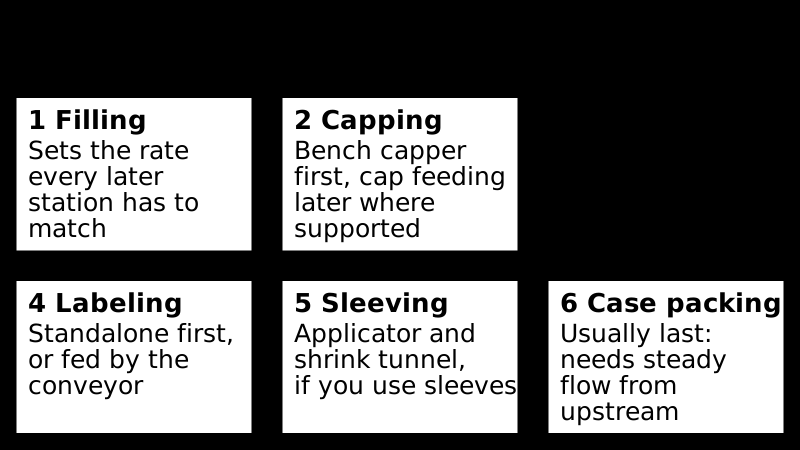
As a reference path, the dependencies point to this order: filling, capping, a conveyor linking the stations, automatic labeling, sleeving and case packing. Later steps rely on what earlier ones provide, mainly a steady rate and bottles arriving upright and evenly spaced. Treat it as a default, not a rule: if a later station is the bottleneck today, it can come first once the handover into it is planned. Skip any station your product does not use, such as sleeving.
What Each Upgrade Step Depends On
A line runs at the rate of its slowest or most stop-prone station. Each upgrade should remove the current bottleneck without creating a new one further down.
- Filling first. The filler sets the rate every later station has to match, so settle the filling method and the number of heads before buying anything downstream.
- Capping second. A bench or inline capper replaces hand tightening, and it helps once you have confirmed that cap and bottle finish match and the defects come from the hand work. Automatic cap feeding, where the capper supports it, comes later, once bottles reach the capper in a steady stream, and it has to suit your cap.
- Conveyor third. Linking the filler, the capper and the next station turns separate machines into a line. Agree transfer heights, bottle guides and the run and stop signals at this point, because every later station connects to them.
- Labeling fourth. An automatic labeler can run standalone with someone loading and unloading it. To run it as part of the line, the conveyor and its guides have to deliver bottles evenly spaced and facing the right way, so plan that handover before connecting it.
- Sleeving fifth, if you use sleeves. The applicator and the shrink tunnel both sit on the conveyor, and neck bands follow the capper.
- Case packing last, unless it is your bottleneck today. A case packer needs steady flow from upstream and a case style and pack pattern that will not change soon.
When Not to Automate a Station Yet
Keep a station manual or semi-automatic while your bottles, caps or labels are still changing. A new container or label can need new guide parts, so ask which change parts and settings each format would need before you automate.
Hold off when the station is not the bottleneck. Automating a station that already keeps pace adds equipment and settings without adding good bottles, because the line still runs at the rate of its slowest station.
Wait as well when there is no room for the conveyor and buffer space the automatic version needs. In that case the next step is a layout check, not a machine.
Mistakes That Make a Later Upgrade Harder
Most of these come from buying a machine before the handover into it is defined: the caps it must handle, the height and direction bottles arrive at, and room for a buffer.
- Buying stations with different working heights or flow directions. Each handover then needs extra parts, and bottles tip at the transfer.
- Choosing a capper without listing every cap you run. The cap decides how caps are fed, so an unlisted cap can mean a new feeder later.
- Ordering an automatic labeler before bottles arrive upright and evenly spaced. Label position follows bottle position, so the labels end up crooked.
- Planning a sleeve applicator without the shrink tunnel and the conveyor length it needs.
- Leaving no space for buffers between stations, so a short stop at the labeler or case packer stops the filler too.
- Comparing stations on machine speed instead of good bottles per shift. Suppliers note that semi-automatic speeds also depend on the operator, so compare them on your own product and bottle.
How This Guide Was Compiled
This guide compiles public information, read on 7 October 2026, from equipment suppliers' pages on semi-automatic filling, capping, labeling, shrink sleeving, case packing and line integration, together with published LINEVO guidance on line balancing, machine interfaces and spare parts.
It gives no speeds or dimensions, because those depend on the product, the bottle and the equipment chosen. The station rules and the order are our judgment from these sources, not results measured on a particular line.
[Sources]
- LINEVO integration principles: the slowest step sets the line rate, and each interface needs agreed transfer heights, signals and buffering. linevopack.com/solutions
- LINEVO note that a new container or label can need new guides or holding parts on the labeler. linevopack.com/services/spare-parts
Semi-Automatic Line Questions
- 01Can a semi-automatic bottle filling machine be connected to a capper later?
- Usually, if you plan for it. Suppliers describe adding filling heads or integrating capping and labeling as output grows. Keep the working height and flow direction compatible, and leave room for a conveyor between the two.
- 02Does a small bottle filling line need a conveyor?
- Not while each station is a separate bench. Once two stations have to run at the same rate, a conveyor sets the spacing and orientation that automatic capping and labeling depend on.
- 03Which station should I automate first after the filler?
- Often capping, because loose or uneven caps cause leaks and label problems further down. If your caps are fine and labeling holds the line back, start with labeling: an automatic labeler can run standalone at first, with the conveyor handover planned for later.
- 04How much does a semi-automatic bottle filling machine cost?
- It depends on the filling method, the number of heads and the stations around the filler. The cost guide lists what to compare in a quotation.
[Request]
Send Your Station List on WhatsApp
Send the seven items from the list above: your product and how thick it is, each bottle and cap, labels or sleeves, the good bottles you need per day, who does what at each station and where bottles wait, how often you change formats, and how cases are packed. Add a photo or sketch of the room and mark anything you are unsure of. We supply stations individually as well as complete lines, so you can automate one station now and add the next one later. We reply within 24 hours with the station we would look at next and what it needs from the stations around it. For a full quotation brief, use the RFQ checklist.
[Keep planning]
- How to Choose a Filling LineWork from the product and package to the output you need, then decide what is automatic and check the space.
- Line LayoutSend your floor plan and photos on WhatsApp. We review how the process flow, access and utilities fit the room and include that in your line proposal.
- Filling Line CostNo single price fits every line. This guide explains what moves the cost and how to compare quotations on the same scope.
- RFQ ChecklistPrepare these details once and send them in one WhatsApp conversation. If a value is not known yet, write "not decided". A clear gap helps more than a guess.